Pretty Good Hat

Protest and Protesters

Way back in 2004 when I was getting a PhD studying social movements, I wrote the below in response to sneering at anti-war protests as incoherent and unfocused. I’m re-posting it because sneering at protest is apparently cool again,1 according to this guy at The American Prospect who doesn’t have scintilla of evidence to his claim that recent No Kings protests are a) run by old people instead of by youths as the 60s showed to be Right and True, and b) ineffective because young people have too many diverse grievances for protest to do any good, anyway.

Look there are actual recent literatures on this and decades of data and study which somebody with a national magazine platform could engage in. I’ve been away for a while but I think these observations in response to “why aren’t the kids protesting right” still hold up okay. TL;DR is something like, large protests have always been highly heterogeneous in participant makeup and grievance, protest effectiveness varies in a bunch of complex ways, and it’s at minimum a proposition that needs actual evidence to say that today’s protests are missing whatever magic contemporary writers romantically ascribe to the protests of the 1960s. If anything, I think I’d now simply be less kind to the obvious bad faith views I was responding to, as I see most of the internet is doing to this dumb TAP post.2

Covering yesterday’s massive demonstrations in New York, Matt Yglesias, Ezra Klein, and Jesse Taylor all worry, to different degrees, about what Ezra calls “the ideological incoherence of protests.” They all suggest that what contemporary protests lack is the unified vision of the civil rights and Vietnam eras.

I’ve commented on protest here before, in particular on the anti-war protests of spring 2003, and on the subject of counting crowd size. On the relevance of protest and some changes in it over time, I think that the first of those posts might still have some interesting material.

But, to think about this idea of the good old days of ideological coherence, I went to the tape–well, to the file cabinet in the corner of my office, really–where five years of 60s and early 70s protest data is stored, and I looked up the largest protests of the era, those most comparable to yesterday’s demonstration.

The single largest event of the period was a Washington, D.C., antiwar rally of November 15, 1969, attended by an estimated 250,000 people. A quick read of the coverage of that weekend–like yesterday’s march, it really was a series of events, not a single event–demonstrates that participants were there to take part for many reasons, although they all ended up under the anti-war banner: Students protested the draft; religious activists ranging from Catholic to Quaker participated; radical leftists were there, as were elderly women and parents with their children, as were small groups seeking violent confrontations; also present were African American organizers and advocates for the poor, protesting the war’s diversion of funds from domestic programs. This is still an oversimplified list of participants; it’s clear that while the war was the most tangible target of the protests, many grievances actually brought protesters out. Like this weekend’s march, officially organized by United for Peace and Justice, that series of events had a nominal set of organizers, but plenty of other groups also participated. In a sister protest across the country, where another 100,000 people demonstrated, Physicians for Social Responsibility and the Gay Liberation Front were among notable organizations represented.

Similarly, earlier that year close to 100,000 people participated in a late-April anti-war march in New York City, in which anti-war and anti-racist claims were mixed. On the same day in Chicago and San Fransisco, another ten thousand protesters in each city marched against the war, poverty, and racism.

So, a pretty cursory look at protest data suggests that what we think of today as a unified antiwar protest was actually highly heterogeneous, both in terms of who participates as well as why they participate. The answer to Jesse’s question, “What would have happened if Selma was joined by the Socialist Worker’s Party, or anti-globalization people (or their relative counterparts from the 60s)?” is that in many cases that’s just what happened.

What might this mean for making sense of yesterday’s march? A couple of suggestions. First, the concern over a diluted ideology resulting in a lack of efficacy may not be warranted–which is not to say that there may be plenty of other reasons to worry about efficacy–because, like civil rights and anti-war protests of past eras, yesterday’s march did have a target, boiled down in all of its forms to the policies of the Bush administration. Second, I think that Ezra’s absolutely right when he says that, regardless of activist makeup, media portrayal is still important, and negative coverage can still scatter some of a protest’s power. Too much focus on the differences among activists, the expressive use of protest, or the carnival atmosphere of some protest will play down the unifying reason for protesters to come together; but, I would argue that this is less a function of changes in protest than in changes in how news is made.


  1. Tbh, it’s never been un-cool. Nothing media likes much more than saying that collective action doesn’t matter and that those who participate in it are variously naive, insincere, or insufficiently well-informed to be properly committed to the cause. ↩︎

  2. Doesn’t escape my notice that I was responding to Matt Yglesias. lol ↩︎

A wide concrete pier extends into the Puget Sound. In the distance under a mostly clear blue sky — just some whisps of light clouds — are the Olympics, with snow at the highest elevations.

A big golden brown croissant sits on a plate beside a cappuccino in an angled, tinted glass cup.

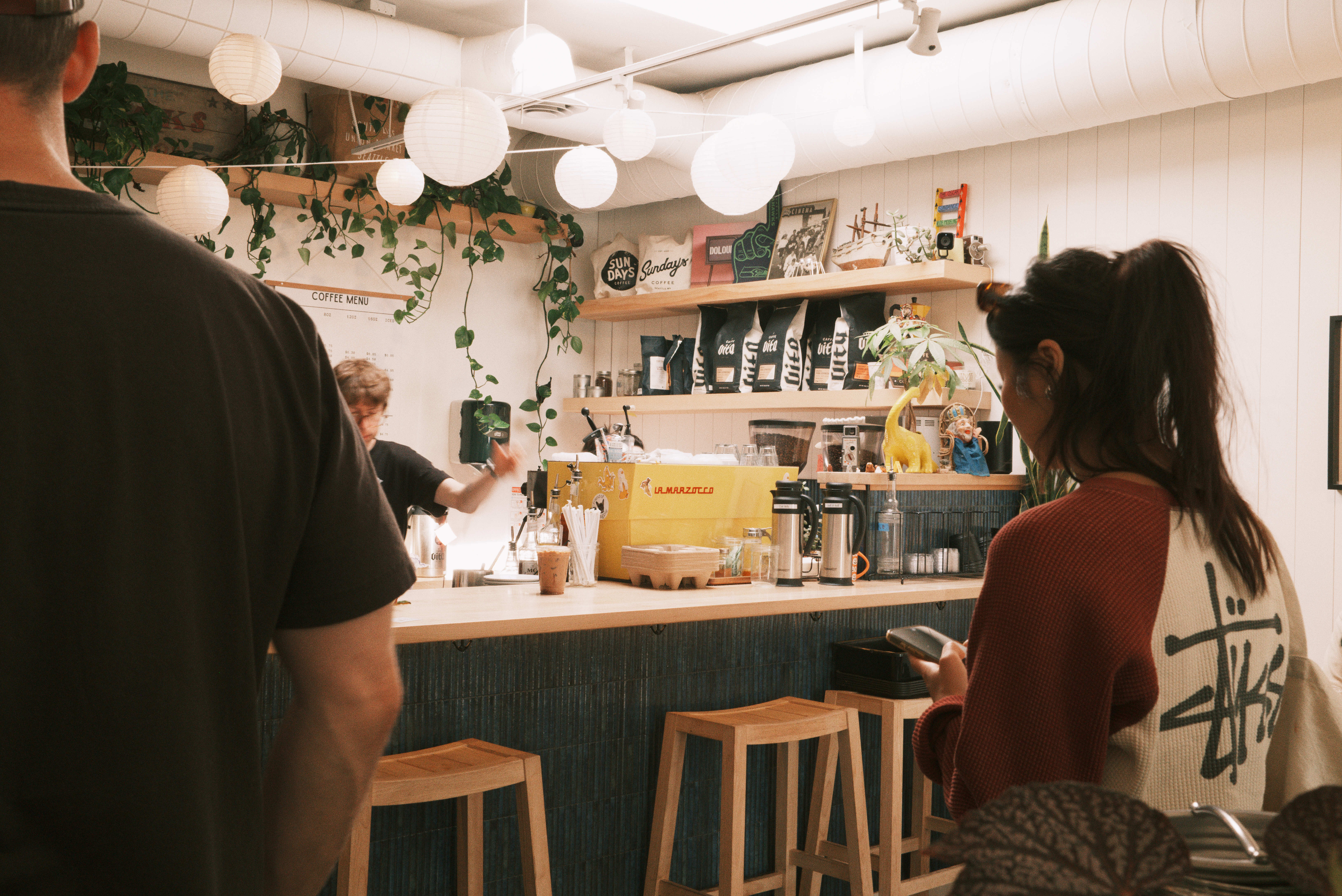
I got out to ride the 2 Line to downtown today, where I had a croissant and a cappuccino at the beautiful Boon Boona cafe that sits above the waterfront. What a beautiful spring day!

A pair of old bolts on a rusty, painted railing

There are some casual clubs in town that organize periodic group ferry rides – what a treat! Taking photos with other people who dig ferries! They look like fun and I’d like to join sometime. And it reminds me of the time I got severely scolded by a ferry crew for taking too many photos. Times have changed.

Explaining to my kid that when I went to college, your dorm room had a phone and that was now your phone number. But only for that year. And then you had a different phone number at the place you lived for the summer, and so on.

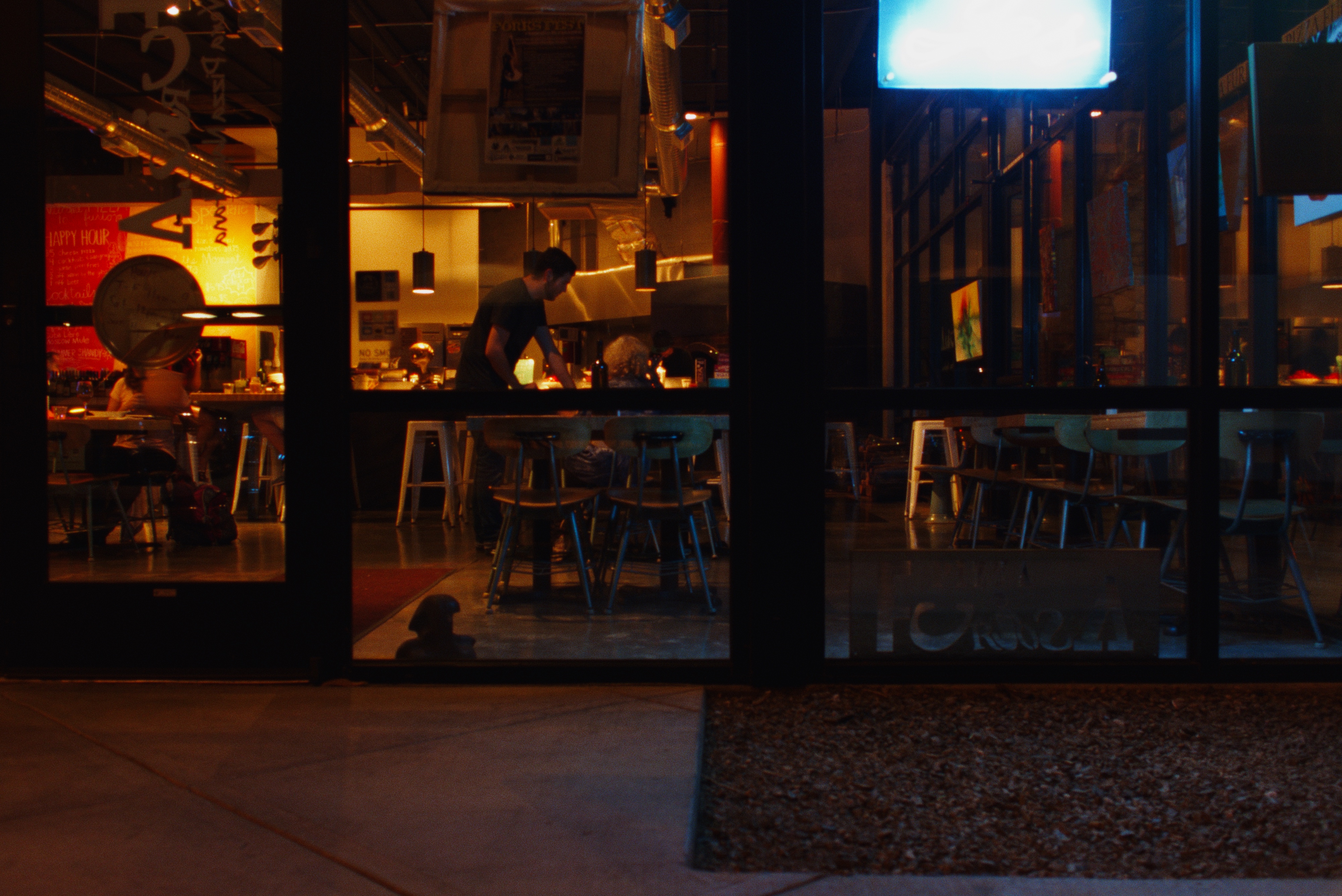
A restaurant store-front lit up in early morning dimness. It has brightly lit windows set in the concrete facade of the building.

This small corner shop would become the place where I got the most delicious and satisfying meal of my trip — a luxurious katsu curry.

A pile of photos in the Journal app.

The MacOS Journal app feels so half-baked. I thought I’d try it for a travelogue of my past week, dragged some photos to it, and it just dumps them in a pile. There’s no arranging, scaling for layout of landscape and portrait, nothing. C’mon, Apple, I’m trying to not shell out for Day One again, here.

Boring website administrivia

It’s been a couple of nice hobby web site weekends here are Pretty Good Hat PNW. Reading Adam’s great writeup of setting up an IRC server put me in the mood to play around with servers, and with the price of my shared hosting having gone up last year, I thought I’d experiment with setting up some servers at Hetzner.

Well, one good thing led to another, and curling was on TV so I had a lot of good laptop time, and so I’m finishing out this weekend having completely migrated from my prior host after more than ten years there. I learned a bunch about setting up new servers! I can’t say enough good things about Adam’s guide and the encouragement to be found hanging around the omg.lol community.1

Before cancelling my old service, I made an exhaustive scroll through all the content in that home directory, downloading and archiving a lot. Over the years I’ve had everything from twenty years of web sites2, to old versions of my CV, to little R experiments, ruby projects, and other things that kind of scaffolded a lot of my history. It really is true that a good chunk of the story of my life is the story of all the things I’ve done with web sites in that time. It’s a very specific kind of time capsule, those directories full of web projects, jpegs, and datestamps.

misc tools & process notes

  • I used Zed for a lot of my migration work. Its remote editing via an ssh connection works beautifully (and in fact is how I’m writing this post).
  • Caddy is great! The way it enables automatic certificate installation is so seamless.
  • I post with a Drafts action and a cross-platform shortcut for uploading images, both of which hit a little PHP micropub endpoint. It’s really pretty cool that with updates of authentication, I could move my posting tools over to a new host and just … keep using them.
  • web sites and servers are cool and fun to play with

  1. If you happen to want to plink around with some new servers of your own, follow the Hetzner signup link in Adam’s IRC guide; you’ll get a credit and he’ll get one, too, if you stick around! ↩︎

  2. That’s “live” web site time; I just realized that if I go back to college archives, I’m at more than thirty years. Which. Well. ↩︎

One thing I did not anticipate about living in the future was how many Mychart accounts I’d have.

I’ve just recently began to find that newer releases of Qobuz provide the continuity across devices that I’ve missed from Rdio for years. I think this is because Qobuz Connect creates a link between devices that hasn’t previously existed. It’s great: I can listen in the car, and then pick up at the same place from my desk. It’s a little thing that makes a huge difference, and nothing since the good days of Rdio has done it in such a seamless way.